The Human Sushi Repeat-Containing Protein (SRPX) ELISA is a cutting-edge assay designed for the quantitative detection of SRPX in biological samples. This protein plays a pivotal role in multiple cellular processes, including angiogenesis, synaptogenesis, and disease progression in cancer and neurodegenerative disorders. The ELISA kit provides researchers with a robust platform for exploring the expression and regulation of SRPX, paving the way for breakthroughs in medical and biological sciences.
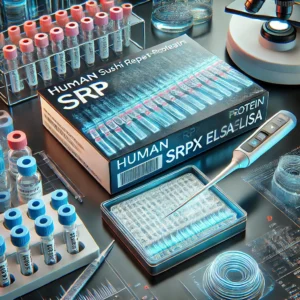
What is Sushi Repeat-Containing Protein (SRPX)?
Sushi Repeat-Containing Protein (SRPX) is a secreted protein containing sushi repeats, also known as complement control protein (CCP) domains. It has been implicated in:
- Synaptogenesis: Essential for neural synapse formation and maintenance. Learn more about synapse biology from the NIH National Institute of Neurological Disorders and Stroke (NINDS).
- Angiogenesis: Regulates new blood vessel formation. Explore angiogenesis at the National Cancer Institute (NCI).
- Cancer Progression: Overexpression of SRPX is associated with various cancers, including gastric and lung cancer. Visit PubMed for more on SRPX and cancer.
Features of the SRPX ELISA Kit
- High Sensitivity: Detects low levels of SRPX in serum, plasma, or cell culture supernatants.
- Quantitative Analysis: Provides accurate measurement of SRPX concentrations.
- Ease of Use: Includes pre-coated plates and optimized reagents for straightforward application.
- Wide Applications: Ideal for clinical research, cancer studies, and neurobiology.
For detailed specifications, visit CDC Laboratory Testing Resources and FDA ELISA Guidelines.

Applications of SRPX ELISA in Research
1. Cancer Research
SRPX is a potential biomarker for tumor angiogenesis and progression. It has been identified as a target for therapies aimed at inhibiting abnormal vascular growth in cancers. Explore therapeutic approaches at NIH Cancer Research Resources.
2. Neurodegenerative Disorders
Alterations in SRPX expression are linked to neurodevelopmental disorders and Alzheimer’s disease. Learn about the role of SRPX in neurodegeneration at Alzheimer’s Disease Research Center (NIA).
3. Angiogenesis Studies
SRPX-mediated angiogenesis is critical for understanding vascular biology in normal and pathological states. For related methodologies, see USDA Research Tools.
How the SRPX ELISA Works
The SRPX ELISA uses a sandwich enzyme-linked immunosorbent assay format. Pre-coated plates capture SRPX in the sample, and detection is achieved using a biotinylated antibody, followed by a streptavidin-HRP conjugate. The reaction generates a colorimetric readout proportional to SRPX levels.
Detailed assay protocols are available through WHO Laboratory Standards and NIH Clinical Research Guidelines.
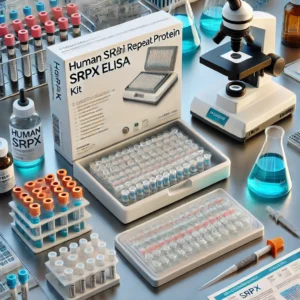
Benefits of Using the SRPX ELISA Kit
- Reproducibility: High batch-to-batch consistency ensures reliable results.
- Versatility: Applicable to diverse sample types and experimental settings.
- Scalability: Suitable for high-throughput screening.
For more on assay development, refer to FDA Diagnostic Methods and CDC Assay Validation Resources.
Storage and Handling
- Storage: Keep at 2–8°C for short-term use and freeze at -20°C for long-term storage.
- Stability: Avoid repeated freeze-thaw cycles to maintain reagent integrity.
Guidelines for proper storage are detailed at CDC Biosafety Manual.
Regulatory Compliance
The SRPX ELISA is manufactured in compliance with international research and clinical standards. Review regulatory information on diagnostic kits at the FDA and WHO.
Further Reading and Resources
- NIH Protein Databases
- PubMed Articles on SRPX
- USDA Research Initiatives
- NCI’s Angiogenesis Research Resources
- CDC Laboratory Guidelines
Conclusion
The Human Sushi Repeat-Containing Protein SRPX ELISA Kit is an indispensable tool for advancing research in cancer biology, neurodegeneration, and vascular biology. Its sensitivity, precision, and versatility make it a trusted choice for scientists worldwide. For more information, consult resources like NIH, CDC, and FDA.
For purchasing or technical support, visit trusted suppliers and explore additional resources on NIH ELISA Toolkits.