Introduction to Acetyl-CoA and Its Biological Significance
Acetyl-Coenzyme A (Acetyl-CoA) is a central metabolic intermediate that functions as a key substrate in numerous cellular pathways, including the tricarboxylic acid cycle (TCA cycle), fatty acid biosynthesis, cholesterol synthesis, and histone acetylation. It is essential for both energy production and epigenetic regulation (National Library of Medicine).
Because of its involvement in metabolic flux and cell signaling, accurate measurement of Acetyl-CoA is crucial for understanding metabolic diseases, cancer progression, and neurodegenerative disorders (National Institute on Aging).

Technical Overview: How the Acetyl-CoA Fluorometric Assay Kit Works
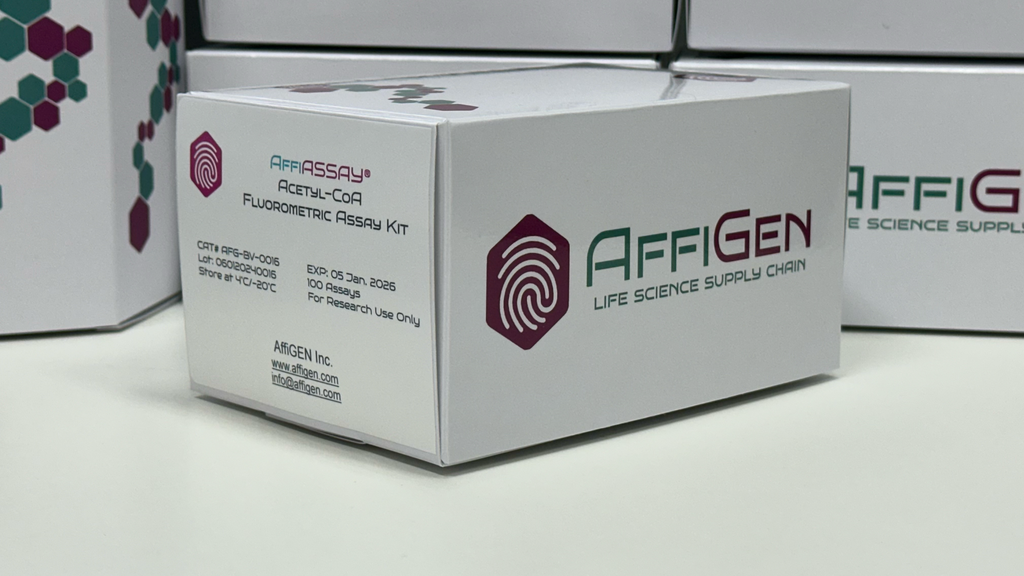
The Acetyl-CoA Fluorometric Assay Kit is a robust analytical tool used for detecting and quantifying Acetyl-CoA in a wide range of biological samples. It operates through a multi-step enzymatic cascade where Acetyl-CoA is converted into a fluorescent signal (NIH Assay Guidance Manual).
Key Technical Steps:
-
Acetyl-CoA is cleaved enzymatically.
-
An intermediate metabolite is generated.
-
The final product emits fluorescence (~Ex/Em = 535/587 nm).
The fluorescent signal is directly proportional to the Acetyl-CoA concentration in the sample (UCLA Biochemistry).
Sensitivity and Range
-
Detection limit: < 10 pmol/well
-
Dynamic range: 10 pmol to 1 nmol
-
High specificity: Minimal interference from free CoA and other acyl-CoAs
Sample Types Compatible with the Assay Kit
The assay is validated for:
-
Mammalian tissue lysates (brain, liver, muscle)
-
Cultured cell lysates (adherent or suspension)
-
Mitochondrial fractions
-
Serum and plasma
Proper sample handling is critical to avoid degradation. Use of ice-cold buffers and rapid processing is recommended (CDC Laboratory Biosafety).
Applications in Biomedical Research
1. Cancer Biology
Acetyl-CoA levels influence histone acetyltransferase (HAT) activity and alter gene transcription profiles in cancer cells (National Cancer Institute).
2. Neuroscience
The kit is used to monitor changes in Acetyl-CoA metabolism in models of Parkinson’s and Alzheimer’s disease (NIH Brain Initiative).
3. Metabolic Syndrome
In obesity and diabetes, abnormal Acetyl-CoA accumulation affects insulin signaling and lipid storage (CDC Diabetes Statistics).
4. Epigenetics and Chromatin Remodeling
Acetyl-CoA provides acetyl groups for histone acetylation, influencing chromatin structure and gene accessibility (NIH Epigenomics Program).
Integration with Multi-Omics Workflows
The Acetyl-CoA assay can be integrated with:
-
Transcriptomics (NCBI GEO) to correlate metabolite levels with gene expression.
-
Proteomics (NHLBI Proteomics) to link metabolic flux to protein acetylation.
-
Metabolomics (NIH Metabolomics Program) for systemic analysis of energy-related intermediates.
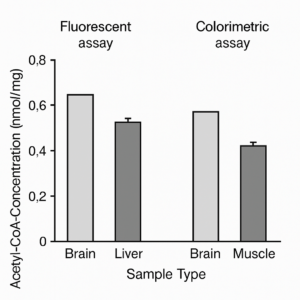
Advantages Over Colorimetric Assays
| Parameter | Fluorometric Assay | Colorimetric Assay |
|---|---|---|
| Sensitivity | ~10 pmol | >100 pmol |
| Signal-to-noise | High | Low |
| Multiplexing potential | High | Limited |
Fluorometric assays are ideal for low-abundance targets, high-throughput screens, and integration with robotic platforms (MIT Biology).
Troubleshooting and Interference Considerations
Common Interferences:
-
Thiols (e.g., glutathione) can reduce signal.
-
NADH/NADPH may interfere with some readouts.
-
Detergents used in lysis buffers can inhibit enzyme function (Rutgers Biochemistry).
Recommended Controls:
-
Blank controls
-
Positive control (known Acetyl-CoA spike)
-
Matrix control (untreated lysate)
Storage, Stability, and Kit Components
Storage Conditions:
-
Enzyme mix: -20°C, avoid freeze-thaw cycles
-
Fluorescent probe: Protect from light
-
Assay buffer: Stable at 4°C for 1 month
Kits are validated under Good Laboratory Practice (GLP) conditions (FDA Guidelines).
Protocol Summary
| Step | Action | Time |
|---|---|---|
| 1 | Prepare samples and standards | 10 min |
| 2 | Add reaction mix | 5 min |
| 3 | Incubate | 30–60 min |
| 4 | Read fluorescence | 5 min |
For full automation, the protocol is compatible with liquid handling systems and microplate readers (NIH Robotics & Automation Core).
Conclusion
The Acetyl-CoA Fluorometric Assay Kit is an essential tool for precise measurement of intracellular Acetyl-CoA levels. Its high sensitivity, low background, and compatibility with a wide range of sample types make it indispensable in research on cancer metabolism, epigenetics, neurological disorders, and obesity. When combined with multi-omics workflows, this kit helps elucidate complex regulatory networks involved in metabolic homeostasis and cellular differentiation.
For advanced users, integration with machine learning algorithms to analyze temporal changes in Acetyl-CoA under stress conditions or drug treatment is emerging as a frontier in systems biology (DOE Systems Biology Knowledgebase).