Introduction
Human hepcidin is a key regulator of iron homeostasis, playing a critical role in iron absorption, distribution, and storage. The quantification of hepcidin levels in biological samples is essential for understanding various disorders associated with iron metabolism, including anemia, hemochromatosis, and chronic kidney disease. The Human Hepcidin ELISA (Enzyme-Linked Immunosorbent Assay) is a widely used analytical method for the precise and reliable measurement of hepcidin in serum, plasma, and urine samples.
What is Hepcidin?
Hepcidin is a small peptide hormone synthesized primarily by the liver. It regulates iron levels in the body by binding to the iron transporter protein ferroportin, which is located on the surface of cells involved in iron absorption and recycling, such as enterocytes, hepatocytes, and macrophages. Upon binding, hepcidin induces the internalization and degradation of ferroportin, thereby decreasing iron efflux from these cells and reducing serum iron levels. The expression of hepcidin is regulated by factors such as iron stores, inflammation, erythropoiesis, and hypoxia.
For more information about hepcidin and its role in iron metabolism, visit NIH and MedlinePlus.
Clinical Significance of Hepcidin Measurement
Quantifying hepcidin levels is crucial for diagnosing and managing disorders related to iron metabolism. In conditions such as anemia of chronic disease, elevated hepcidin levels can restrict iron availability, leading to functional iron deficiency. Conversely, low hepcidin levels are often associated with iron overload disorders, such as hereditary hemochromatosis. Hepcidin measurement is also useful in monitoring treatment efficacy in patients with anemia or iron overload.
For further reading, see research published on PubMed and clinical guidelines on CDC.
Human Hepcidin ELISA: Principles and Protocol
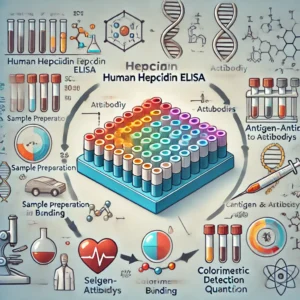
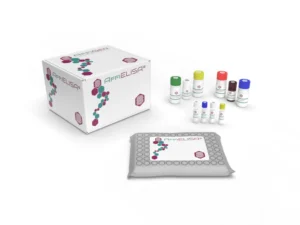
The Human Hepcidin ELISA kit is designed to quantitatively measure hepcidin in biological samples. The assay is based on the principle of specific antibody-antigen binding and colorimetric detection. The process involves the following steps:
- Sample Preparation: Serum, plasma, or urine samples are collected and processed. For guidelines on proper sample collection, refer to the FDA.
- Antigen-Antibody Binding: Hepcidin present in the sample binds to a specific antibody coated on the microplate.
- Detection: A secondary antibody, conjugated with an enzyme, is added to form a complex. The enzyme reaction produces a color change, which is measured spectrophotometrically.
- Quantification: The intensity of the color is directly proportional to the concentration of hepcidin in the sample.
Detailed protocols and standard operating procedures can be found on CDC and NIH.
Applications in Research and Diagnostics
The Human Hepcidin ELISA kit is extensively used in both clinical and research settings. In clinical diagnostics, it helps evaluate patients with anemia of chronic disease, iron-refractory iron deficiency anemia, and conditions leading to iron overload. Research applications include studying the regulation of hepcidin expression, the effects of inflammatory cytokines on iron metabolism, and the interaction between hepcidin and erythropoiesis.
- To learn more about iron-related disorders, explore resources from the National Institutes of Health.
- For information on the role of hepcidin in anemia, visit the American Society of Hematology.
Advantages of Using Human Hepcidin ELISA
- High Sensitivity and Specificity: The assay provides precise quantification with minimal cross-reactivity.
- Versatile Sample Types: It can measure hepcidin levels in serum, plasma, and urine.
- Ease of Use: The kit is user-friendly, with clear instructions and rapid turnaround time.
- Wide Dynamic Range: Suitable for detecting a broad range of hepcidin concentrations.
For detailed comparisons of various assay kits, refer to studies on PubMed and data sheets from FDA.
Case Studies and Research Findings
Recent studies have demonstrated the effectiveness of hepcidin measurement in various clinical settings. For instance, researchers found that monitoring hepcidin levels can help tailor iron supplementation therapy in patients with chronic kidney disease, minimizing the risks of iron overload and improving patient outcomes. Additionally, studies on the regulation of hepcidin expression provide insights into therapeutic targets for treating anemia of chronic disease and other iron-related disorders.
Explore detailed case studies and findings on NCBI and CDC.
Conclusion
The Human Hepcidin ELISA is a valuable tool for the accurate assessment of hepcidin levels in clinical and research applications. By enabling precise measurement of this critical peptide hormone, the assay facilitates better understanding and management of various disorders associated with iron metabolism. Ongoing research continues to unveil new insights into hepcidin’s role, underscoring its significance in health and disease.