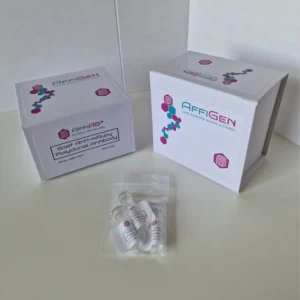
The Goat Anti-mRuby Polyclonal Antibody is a high-performance reagent designed for detecting the mRuby protein, a red fluorescent protein widely used in cellular and molecular biology research. Produced in goats, this antibody exhibits remarkable specificity and affinity for the mRuby protein, making it a critical tool for applications in microscopy, protein tracking, and cell signaling studies.
What is mRuby?
mRuby is a monomeric red fluorescent protein derived from Entacmaea quadricolor. It is frequently used as a fluorescent tag in protein expression studies to visualize and track cellular processes. Its bright fluorescence, high photostability, and compatibility with live-cell imaging make it a preferred choice among researchers. To learn more about fluorescent proteins and their applications, visit NIH and NCBI.

Key Features of Goat Anti-mRuby Polyclonal Antibody
- High Specificity: Detects mRuby with minimal cross-reactivity.
- Wide Application: Compatible with multiple techniques including Western blotting, immunofluorescence, and immunohistochemistry.
- Validated Performance: Extensively tested for consistent results across various experimental conditions.
For detailed protocols on antibody validation, refer to the National Center for Biotechnology Information (NCBI) and CDC Laboratory Methods.
Applications in Research
The Goat Anti-mRuby Polyclonal Antibody has versatile applications:
- Immunofluorescence (IF): Visualizes mRuby-tagged proteins in live or fixed cells. Explore the basics of immunofluorescence at PubMed.
- Western Blotting (WB): Detects mRuby fusion proteins in complex lysates. Learn more about protein blotting techniques from NIH’s Protein Techniques.
- Immunohistochemistry (IHC): Detects mRuby in tissue sections for histological analysis. For insights into IHC protocols, check USDA’s Immunohistochemistry Resources.
- Flow Cytometry: Enables quantification of mRuby expression in heterogeneous populations. For advanced techniques, see the NCI Flow Cytometry Facility.
Production and Quality Assurance
The Goat Anti-mRuby Polyclonal Antibody is produced by immunizing goats with purified mRuby protein. This process ensures the generation of antibodies with diverse epitope recognition, enhancing detection sensitivity. For detailed immunization processes, visit FAO Immunization Resources.
Storage and Handling
Proper storage ensures the antibody’s longevity:
- Short-Term Storage: Keep at 2–8°C for up to one week.
- Long-Term Storage: Aliquot and store at -20°C to prevent freeze-thaw cycles.
For storage guidelines, refer to the CDC’s Laboratory Biosafety Manual.
Related Research and Development
The use of fluorescent proteins like mRuby has revolutionized cell biology. Researchers continue to explore novel applications of fluorescent proteins for live-cell imaging and high-throughput screening. Visit NIH’s Cell Biology Resources for updates on ongoing studies.

Regulatory Compliance
The antibody is manufactured in compliance with international quality standards, ensuring reliability for critical research. Review regulatory guidelines on antibody production at the FDA Biologics Division and WHO Laboratory Standards.
Additional Resources
- Learn more about antibody development at NIH’s Antibody Resource Page.
- Explore mRuby-tagged protein applications on NCBI’s Protein Database.
- Access validation data for mRuby antibodies at CDC Laboratory Validation Resources.
Conclusion
The Goat Anti-mRuby Polyclonal Antibody stands out as a reliable tool for detecting mRuby-tagged proteins, offering unmatched specificity and versatility for research applications. By leveraging this antibody, researchers can advance studies in protein expression, cellular imaging, and functional genomics. For more information, visit NIH, FDA, or WHO.